Headaches: Types, Causes, and When Should You See a Doctor?
2 August, 2026
A Headache Is a Message from Your Body, So Listen to It
Headaches are one of the symptoms many people treat as something simple.Sometimes, the first solution people think of is taking a painkiller. However, a headache can be a message from your body that something needs attention.Beyond is here to help you understand the different types of headaches, what may trigger them, and when you should not wait.
Types of Headaches
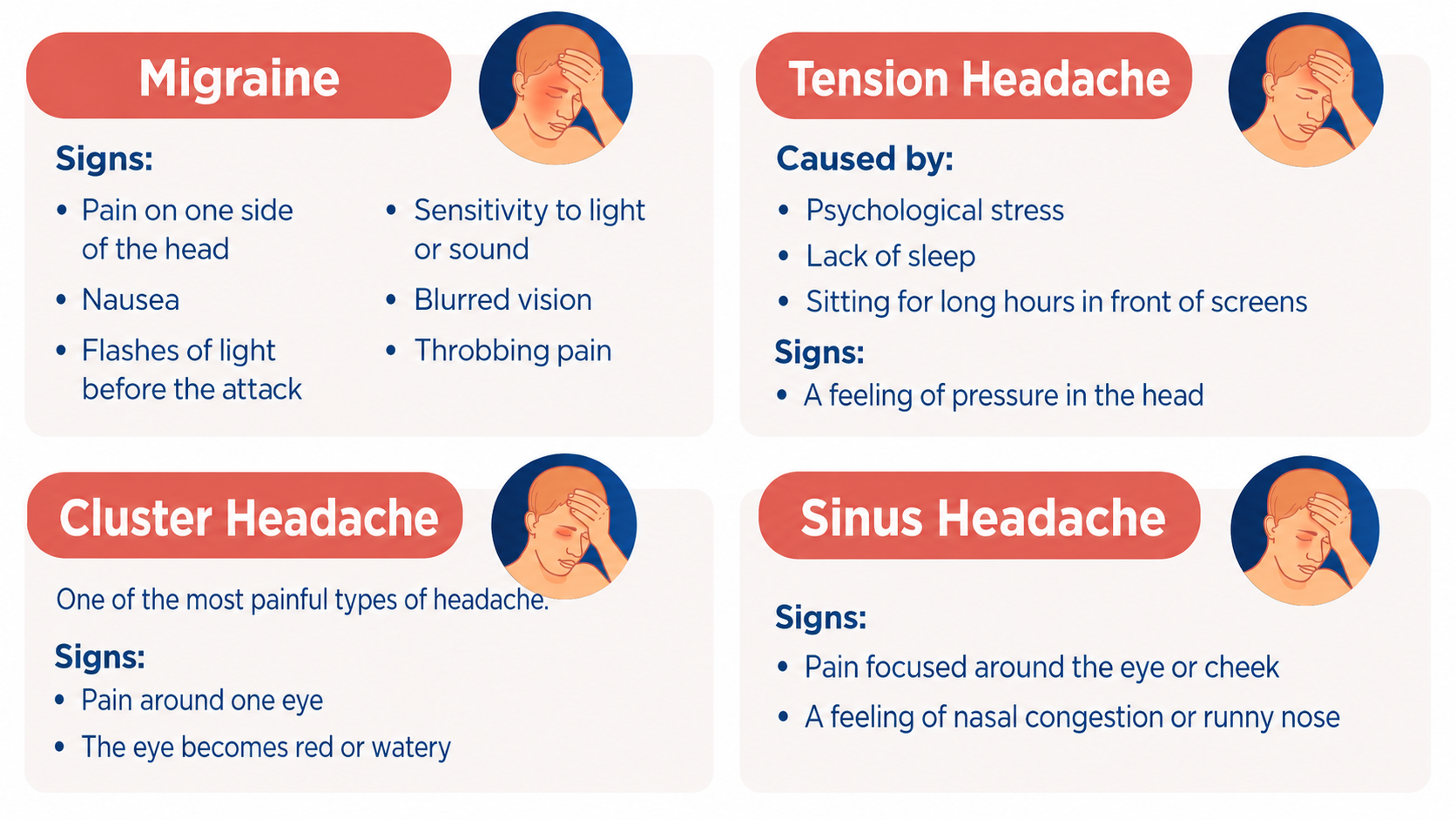
Headaches have different types, and each type may have signs and causes that help you understand your body better.
What Triggers Headaches in the First Place?
Simple daily habits can increase the chances of having a headache, and sometimes we may not notice them.Common headache triggers include:Therefore, understanding these triggers can help you reduce repeated headaches and know what your body needs.
Is a Painkiller Always the Solution?
Not necessarily.Using painkillers repeatedly without knowing the cause can make headaches happen more often. Sometimes, it can also cause a new type of headache because of overusing painkillers.That is why, before taking a painkiller, ask yourself:These answers may help you understand the main cause instead of only treating the headache as a symptom.
When Should You Not Wait?
In some cases, a headache should not be delayed or treated as something simple.You should see a doctor immediately if:
The headache appears suddenly
It is very severe
It is different from your usual headaches
It comes with weakness, numbness, blurred vision, or fever
In these cases, medical follow-up is very important for reassurance.A headache is not always just pain that needs a painkiller. Sometimes, it is a message from your body that you need better sleep, more water, regular meals, a break from screens, or less stress.So, listen to your body, understand your headache triggers, and do not ignore any headache that is severe or different from usual.

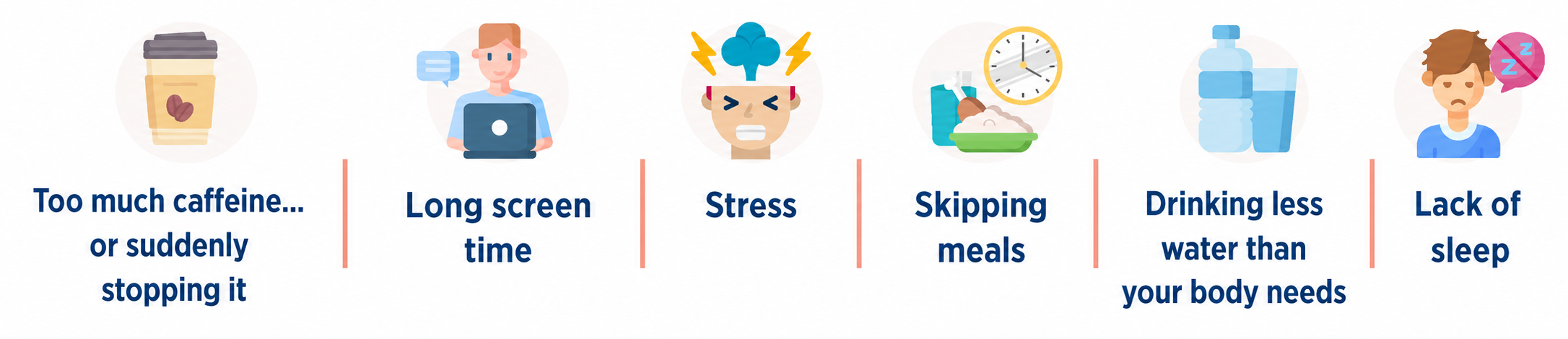 Therefore, understanding these triggers can help you reduce repeated headaches and know what your body needs.
 These answers may help you understand the main cause instead of only treating the headache as a symptom.