Anemia happens when the level of hemoglobin or red blood cells decreases. As a result, the amount of oxygen reaching the body’s organs becomes lower than normal, making a person feel constantly tired even after minimal effort.Simply put: your body is not getting enough oxygen.
Why Is Anemia Dangerous?
Many people think anemia is just tiredness. However, if it is left untreated, it can cause bigger problems.Anemia may lead to:In severe cases, anemia can also affect the heart. That is why it is important not to ignore the symptoms and to do the needed tests early.
Common Types of Anemia
Anemia has different types, and each type has a different cause. Some of the most common types include:Therefore, knowing the type of anemia is an important step to make sure the treatment is suitable for the condition.
What Symptoms Should You Not Ignore?
Certain symptoms may be signs of anemia, especially if they happen more than once or continue for a period of time.Symptoms of anemia include:If you notice more than one symptom, do a complete blood count test CBC.
Who Is Most at Risk of Anemia?
Some groups are more likely to develop anemia than others because of factors such as nutrition, bleeding, or the body’s needs.People most at risk of anemia include:That is why these groups need to monitor their health carefully and get tested if any symptoms appear.
How Can We Protect Ourselves?
Prevention and regular follow-up are very important, especially if you have symptoms or risk factors. You can start with simple steps in your diet and daily routine.
Iron-Rich Foods
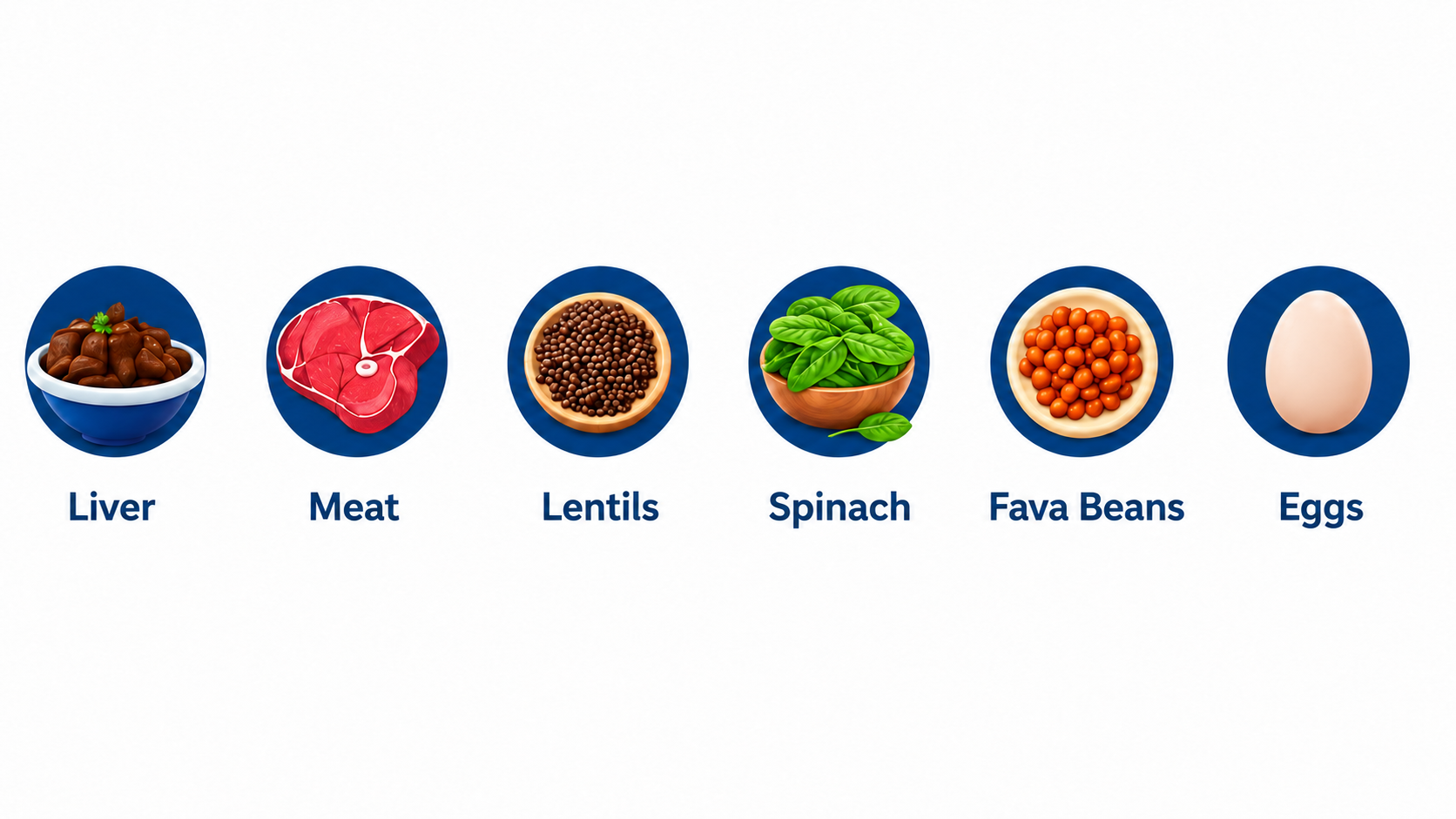
Make sure to eat foods that contain iron, such as:
Tips to Help Reduce the Risk of Anemia
Take vitamin C with food to help iron absorption
Do not drink tea or coffee immediately after eating
Do not take iron supplements on your own without consultation
Do a regular blood test, even if you feel well
Anemia has treatment, but the most important thing is to detect it early and deal with it in the right way.If you feel constant tiredness, dizziness, shortness of breath, or poor concentration, do not ignore the symptoms. Get checked early and feel reassured.

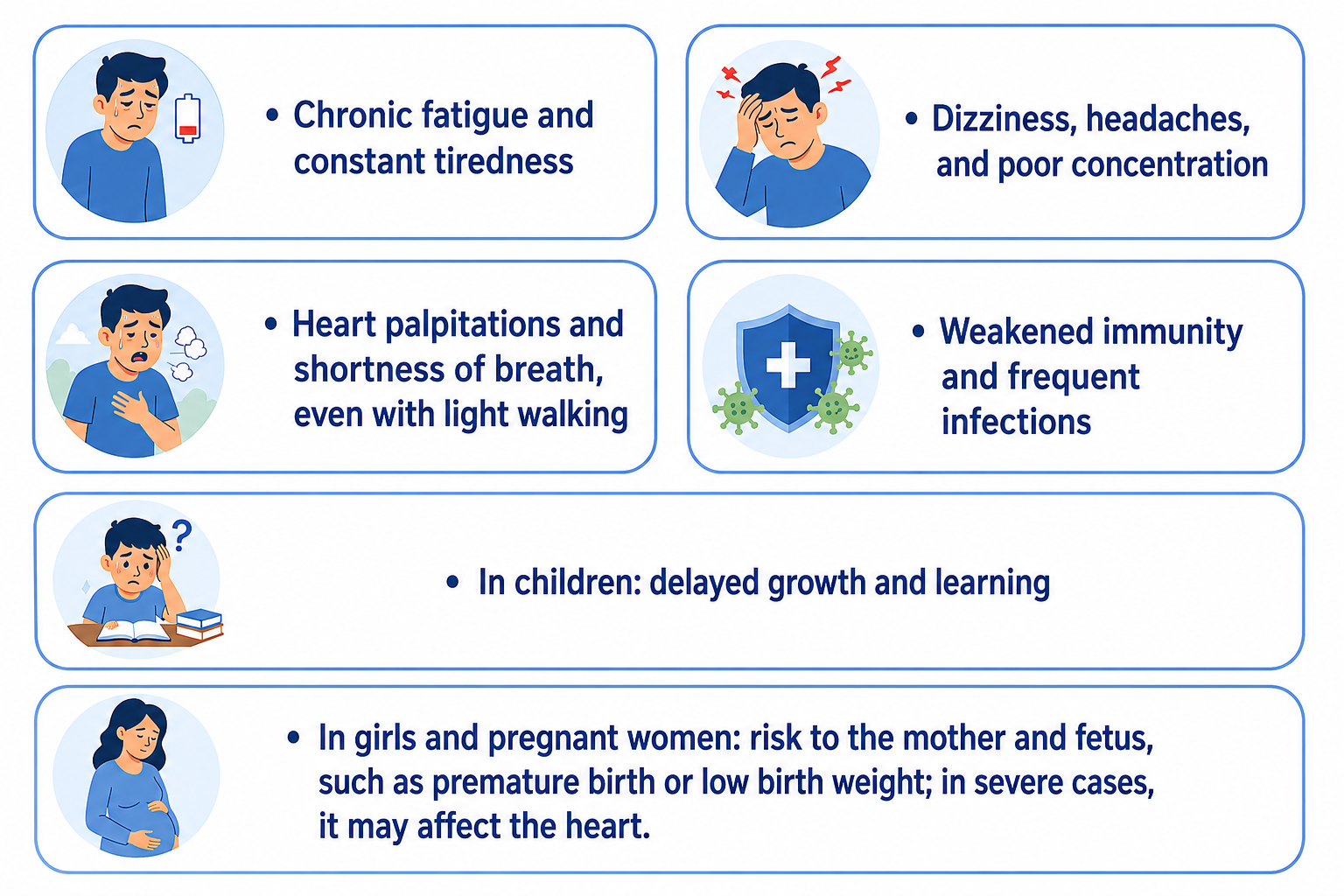 In severe cases, anemia can also affect the heart. That is why it is important not to ignore the symptoms and to do the needed tests early.
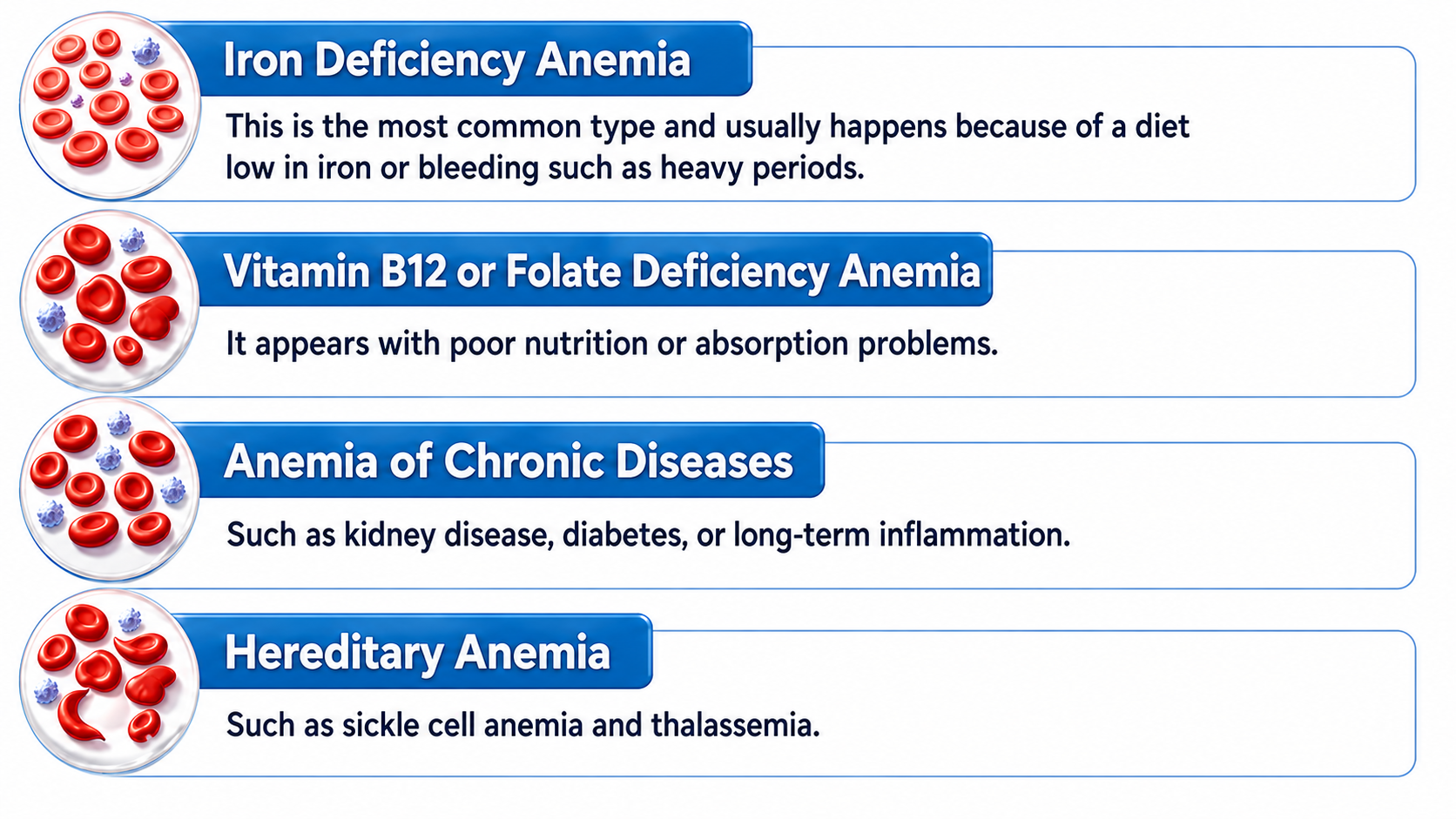 Therefore, knowing the type of anemia is an important step to make sure the treatment is suitable for the condition.
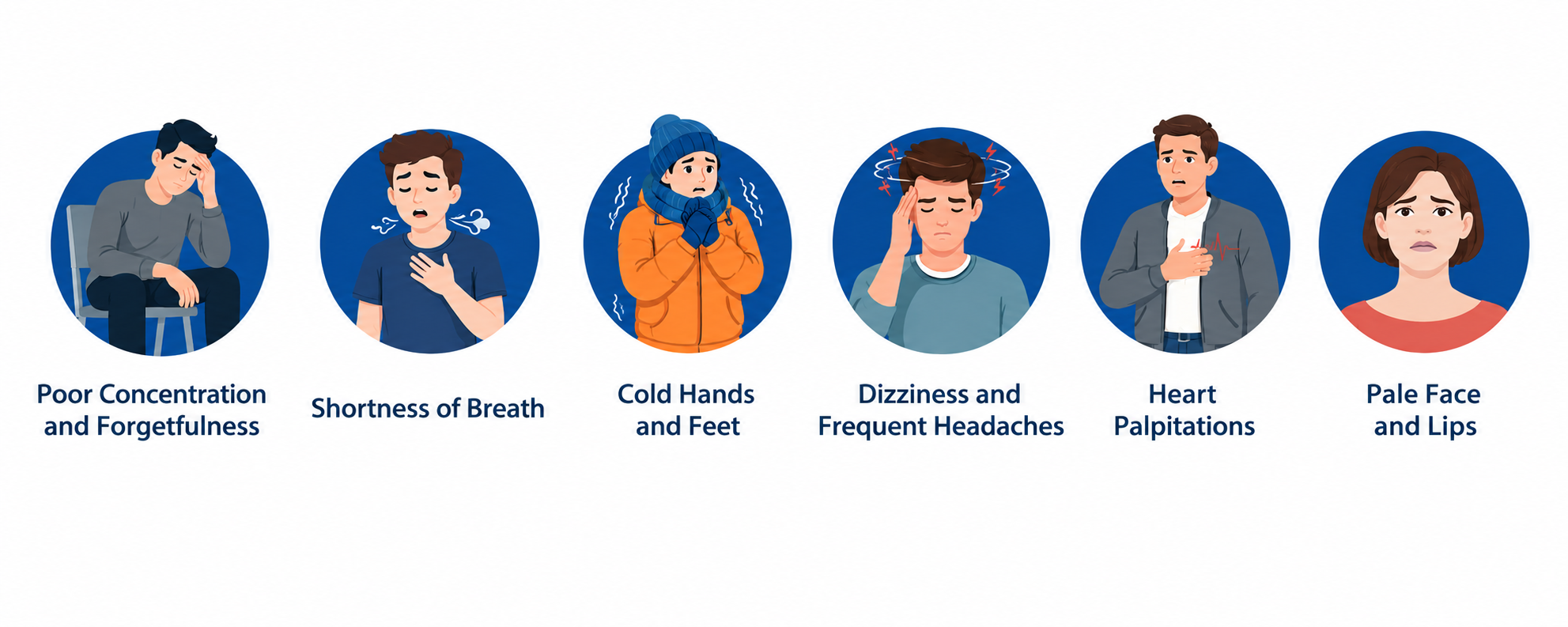 If you notice more than one symptom, do a complete blood count test CBC.
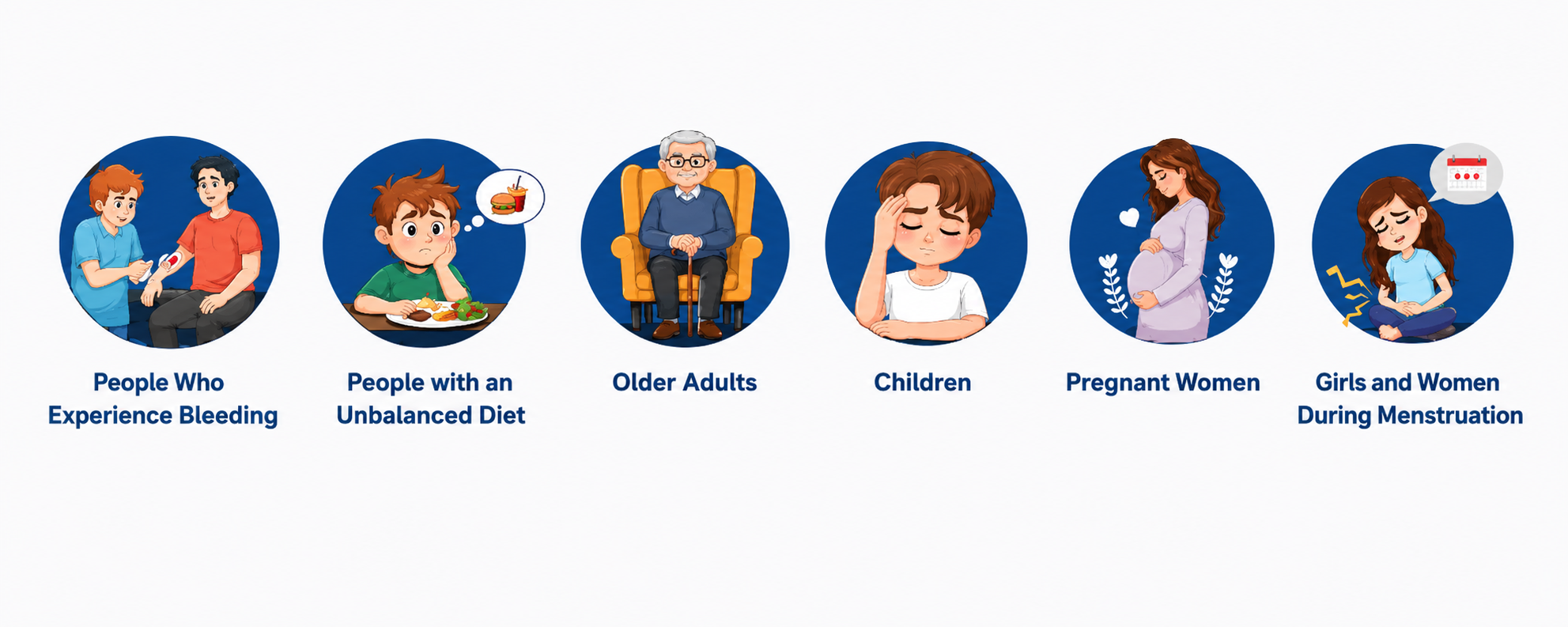 That is why these groups need to monitor their health carefully and get tested if any symptoms appear.